Business continuity depends on more than protecting data and securing networks. Organisations also need dependable communication and collaboration systems that continue to perform when it matters most. Reliable AV infrastructure helps provide that foundation.
Business continuity depends on more than protecting data and securing networks. Organisations also need dependable communication and collaboration systems that continue to perform when it matters most. Reliable AV infrastructure helps provide that foundation.
Every technology decision has a business impact. The systems organisations choose today can affect efficiency, security, customer experience, and future growth for years to come. With so much at stake, choosing a provider is no longer just about comparing products and pricing. It’s about finding a partner who can help navigate the bigger picture.
AV systems are becoming more complex as organisations expand hybrid work, multi-site collaboration, and connected workplace technologies. Behind every smooth meeting or presentation is a network of devices that must work together reliably in real time. As these environments grow, managing and troubleshooting AV systems becomes increasingly challenging.
Hybrid work has changed how organisations think about office space, communication, and collaboration, but the tools supporting it have not always kept up. Meetings often span multiple locations, yet the experience is rarely equal for everyone involved. At the same time, workplaces are becoming more complex with an increasing number of connected systems operating independently of each other.
Most organisations invest heavily in workplace technology expecting everything to work seamlessly. But even with the best tools in place, things still break down, experiences feel inconsistent, and users get frustrated. The problem isn’t always what companies choose, but how everything behind those choices comes together.
As organisations scale, communication becomes more complex to manage across teams, locations, and technologies. Many businesses rely on a mix of tools that work individually but lack consistency when used together. This has led to a growing shift towards all-in-one communication systems that offer a more unified and manageable approach.
What does the future of work actually look like when it moves from theory into real environments? Across industries and roles, organisations are rethinking the way people, spaces, and technology come together in everyday work. This year’s Workplace Summit Singapore offered a closer look at how those ideas are being put into practice.
Most organisations believe their meeting rooms are “ready for hybrid work”. In reality, many are still held back by fragmented systems, inconsistent experiences, and technology that does not scale across locations. As work becomes more distributed, these gaps are becoming more visible to decision-makers.
At DVI Solutions, we believe meaningful workplace transformation comes from bringing together the right people, technology, and ideas. On 19 March 2026, we brought this belief to life through our exclusive Executive Tech Gallery event in collaboration with Cisco and Microsoft.
Every workplace tells a story. Patterns of movement, collaboration and resource use reveal truths that numbers alone cannot. Some organisations notice these signals and act with purpose. Others overlook them and rely on assumptions. The result defines performance and separates progress from stagnation. Understanding these patterns unlocks possibilities that drive operational excellence and strategic growth.
Workplaces are increasingly defined by their technology and how people interact with it. Artificial intelligence is no longer an abstract concept but a practical force that is reshaping how work gets done. From the tools we use every day to the ways decisions are made, intelligent systems are influencing outcomes and expectations. The question is not whether AI will play a role in the future of work but how quickly it will change the present.
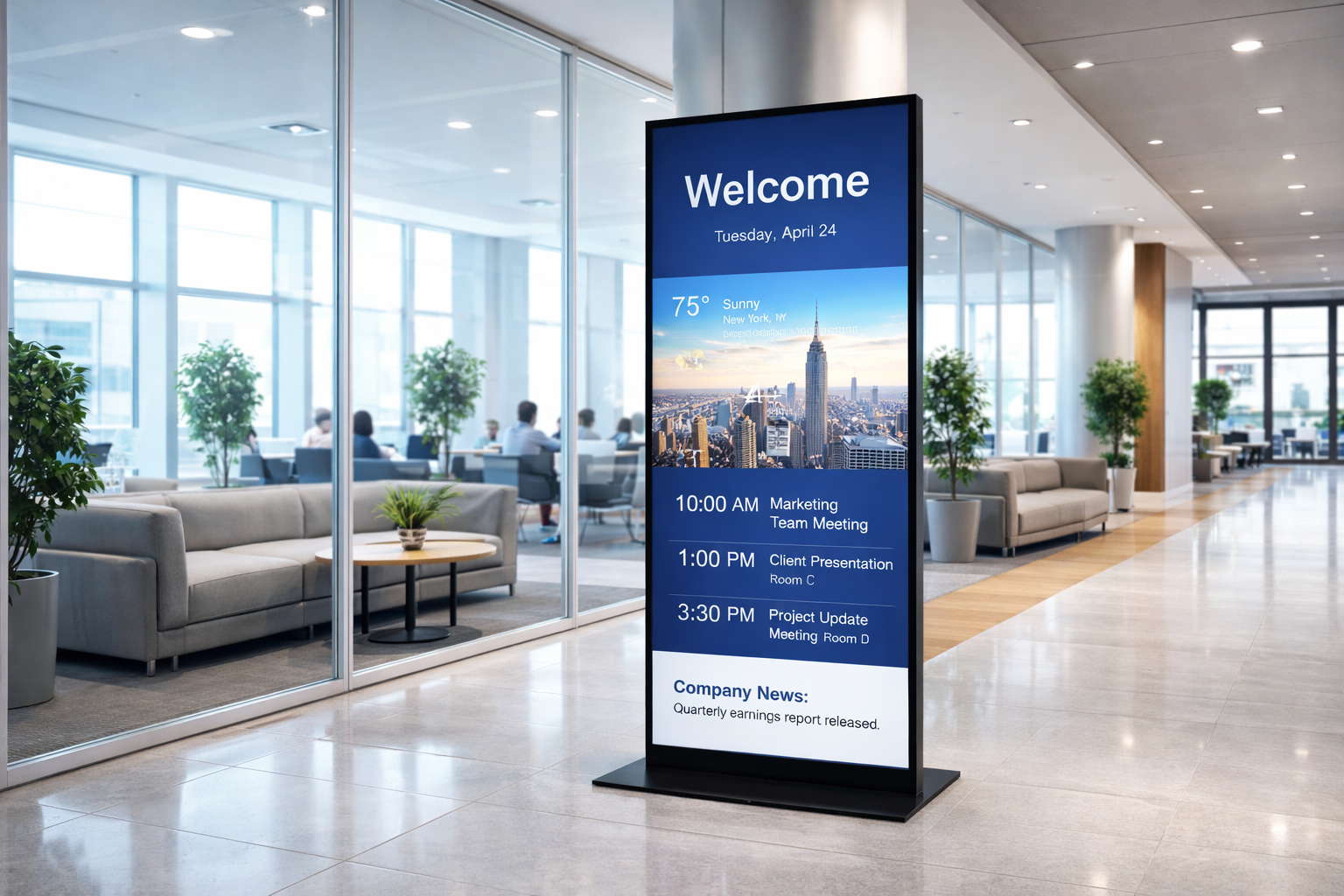
Information shapes decisions, and decisions shape outcomes. Yet many organisations still rely on fragmented communication channels that create inconsistency and delay. Digital signage has traditionally been seen as a display tool rather than a communication system. That perspective is changing as businesses recognise the strategic value of structured, centralised messaging.
Customers no longer judge a business just by its products or services. They notice every interaction and every detail of the experience. Many businesses still rely on outdated methods and end up frustrating visitors or missing opportunities to connect. Effective communication is now about delivering clarity, relevance, and engagement that leaves a lasting impression.
How well is your office space really being used? With hybrid work and flexible schedules, many organisations struggle to understand which areas are busy and which are underutilised. Relying on assumptions or guesswork can lead to inefficient layouts, wasted resources, and frustrated employees. Understanding space patterns is now more critical than ever to make informed workplace decisions.
Meetings often run into problems for very simple reasons. Cables go missing, ports do not fit, and time is wasted before anyone can even start. These little hassles can quietly slow everyone down and make the team look unprepared. But what if there was a way to make every meeting seamless, effortless, and ready to start the moment people sit down?
As organisations grow, collaboration becomes harder to manage without anyone noticing at first. Meetings still happen, tools still work, and teams still deliver, but friction quietly builds in the background. Over time, these small issues begin to affect performance, confidence, and momentum.
We’ve probably all heard someone say, “Can you hear me?” in every meeting. Ideas get lost, voices overlap, and small frustrations subtly pile up. What should take minutes stretches into hours, leaving teams chasing clarity instead of making decisions. These tiny moments shape how productive a workday really is.
Modern technology challenges are reshaping how organisations approach delivery and innovation. As digital ecosystems grow more complex, the focus is shifting beyond traditional vendor relationships. Collaboration is now a strategic necessity rather than a nice-to-have.
Remote and hybrid work are now embedded in how organisations operate and deliver results. Teams collaborate across offices, homes, and regions while maintaining speed, quality, and accountability. When communication tools are fragmented, productivity declines and meetings become less effective.
Installing an AV system is more than just connecting cables and screens. A well-designed system ensures reliable performance, enhances user experience, and supports your organisation’s long-term needs. Careful planning before installation saves time, reduces costs, and prevents frustrating technical issues down the line.
Managing multiple meeting rooms across different offices has become one of the most overlooked operational challenges. Organisations often operate rooms with different hardware and software combinations, creating unpredictable experiences. Meetings start late, participants face technical difficulties, and IT teams are constantly firefighting.
Many companies think AV problems are mainly technical. But in reality, most issues begin long before the equipment is installed. They often come from inadequate planning, incompatible systems, or rushed purchases. Tackling these challenges early is crucial, because effective AV impacts the smooth running of the entire business.
Digital transformation is about rethinking the way your business runs, not just updating systems. It connects teams, streamlines processes, and improves customer interactions. When implemented thoughtfully, it reduces friction and gives leaders a complete picture of operations.
Coordinating messages across multiple offices and sites is one of the biggest challenges for modern organisations. Teams often work in different time zones and with different local priorities which makes consistent communication hard. Athena Signage offers a centralised approach that helps teams deliver the right message to the right place at the right time.
Working remotely or in a hybrid setup is the new normal, but it brings hidden obstacles. Misaligned systems, fragmented workflows, and hidden bottlenecks can quietly slow teams and drain focus. The right workplace technology brings clarity, boosts collaboration, and helps teams achieve real business results.

.png)
.png)
.png)
.png)
.png)
.png)
.png)
.png)
.png)
.png)
.png)
.png)


.png)
.png)
.png)
.png)
.png)
.png)
.png)
.png)
.png)
.png)